
A Victory of Faith
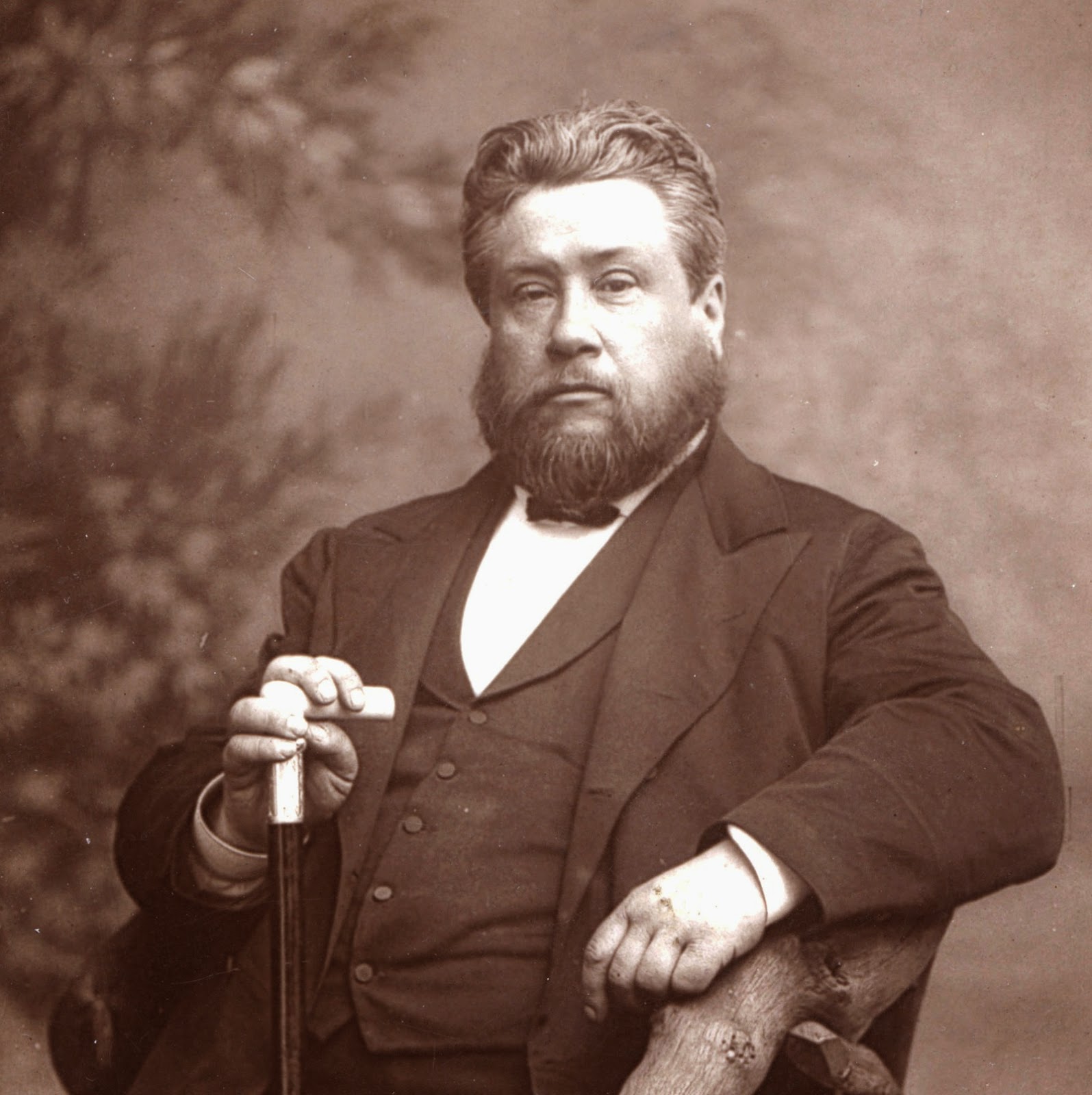
As famously known 'The Prince of Preachers', Charles Haddon Spurgeon, through the help of our Lord and Savior , Jesus Christ, carefully unveils the precious divine jewel that is in 1 John 5:4 using this sermon. Although its not the full measure of the divine providence, it hasn't in any measure availed to be disregarded not even does it undermine the nature of the providence. Spurgeon powerfully expounds the victory of faith that is possessed with them that are born of God and also paints the fierce nature of the war against the world that believers do have, not leaving behind the unwavering portrait of the true believers resolution to refuge and victory, amidst this war. All these is worth for our admonition.
Sermon Content
A Sermon
Delivered on Sabbath Morning, March 18, 1855, by the
REV. C.H. SPURGEON
At Exeter Hall, Strand.
“For whatsoever is born of God overcometh the world; and this is the victory that
overcometh the world, even our faith.”—1 John 5:4.
THE epistles of John are perfumed with love. The word is continually occurring. while
the Spirit enters into every sentence. Each letter is thoroughly soaked and impregnated with
this heavenly honey. If he speaks of God, his name must be love; are the brethren mentioned,
he loves them; and even of the world itself, he writes, “God so loved the world, that he gave
his only begotten Son.” From the opening to the conclusion, love is the manner, love the
matter, love the motive, and love the aim. We stand, therefore, not a little astonished, to
find such martial words in so peaceful a writing; for I hear a sound of war. It is not the voice
of love, surely, that says,” He that is born of God overcometh the world.” Lo, here are strife
and battle. The word “overcometh” seems to have in it something of the sword and warfare;
of strife and contention; of agony and wrestling; so unlike the love which is smooth and
gentle, which hath no harsh words within its lips; whose mouth is lined with velvet; whose
words are softer than butter; whose utterances are more easily flowing than oil. Here we
have war—war to the knife; for I read “Whatsoever is born of God overcometh the world;”
strife until death; battle throughout life; fighting with a certainty of victory. How is it that
the same gospel which always speaks of peace, here proclaims a warfare? How can it be?
Simply because there is something in the world which is antagonistic to love; there are
principles abroad which cannot bear light, and, therefore, before light can come, it must
chase the darkness. Ere summer reigns, you know, it has to do battle with old winter, and
to send it howling away in the winds of March, and shedding its tears in April showers. So
also, before any great or good thing can have the mastery of this world, it must do battle for
it. Satan has seated him self on his blood-stained throne, and who shall get him down, except
by main force, and fight and war? Darkness broods o’er the nations; nor can the sun establish
his empire of light until he has pierced night with the arrowy sunbeams, and made it flee
away. Hence we read in the Bible that Christ did not come to send peace on earth, but a
sword; he came to set “the father against the son, and the son against the father; the mother
against the daughter, and the daughter against the mother; the mother-in-law against her
daughter-in-law, and the daughter-in-law against her mother-in-law;” not intentionally,
but as a means to an end; because there must always be a struggle ere truth and righteousness
can reign. Alas! for that earth is the battle-field where good must combat with evil Angels look on and hold their breath, burning to mingle in the conflict, but the troops of the Captain
of Salvation may be none but the soldiers of the cross; and that slender band must fight
alone, and yet shall triumph gloriously. Enough shall they be for conquest, and the motto
of their standard is ENOUGH. Enough by the arm of the helping Trinity.
As God shall help me, I shall speak to you of three things to be found in the text. First,
the text speaks of a great victory: it says, “This is the victory.” Secondly, it mentions a great
birth: “Whatsoever is born of God.” And, thirdly, it extols a great grace, whereby we overcome
the world, “even our faith.”
I. First, the text speaks of a GREAT VICTORY—the victory of victories—the greatest
of all. We know there have been great battles where nations have met in strife, and one has
overcome the other; but who has read of a victory that over came the world? Some will say
that Alexander was its conqueror; but I answer, nay. He was himself the vanquished man,
even when all things were in his possession. He fought for the world, and won it; and then
mark how it mastered its master, conquered its conquerer, and lashed the monarch who
had been its scourge. See the royal youth weeping, and stretching out his hands with idiotic
cries, for another world which he might ravage. He seemed, in outward show, to have
overcome old earth; but, in reality, within his inmost soul, the earth had conquered him,
had overwhelmed him, had wrapped him in the dream of ambition, girdled him with the
chains of covetousness, so that when he had all, he was still dissatisfied; and, like a poor
slave, was dragged on at the chariot wheels of the world, crying, moaning, lamenting, because
he could not win another. Who is the man that ever overcame the world? Let him stand
forward: he is a Triton among the minnows; he shall outshine Cæsar; he shall outmatch
even our own lately departed Wellington, if he can say he has overcome the world. It is so
rare a thing, a victory so prodigious, a conquest so tremendous, that he who can claim to
have won it may walk among his fellows, like Saul, with head and shoulders far above them.
He shall command our respect; his very presence shall awe us into reverence; his speech
shall persuade us to obedience; and, yielding honour to whom honour is due, we’ll say when
we listen to his voice, ”‘Tis even as if an angel shook his wings.”
I shall now attempt to expand the idea I have suggested, showing you in what varied
senses the Christian overcomes the world. A tough battle, sirs, I warrant you: not one which
carpet knights might win: no easy skirmish that he might win, who dashed to battle on some
sunshiny day, looked at the host, then turned his courser’s rein, and daintily dismounted
at the door of his silken tent—not one which he shall gain, who, hut a raw recruit to-day,
puts on his regimentals, and foolishly imagines that one week of service will ensure a crown
of glory. Nay, sirs, it is a life-long war—a fight needing the power of all these muscles, and
this strong heart; a contest which shall want all our strength, if we are to be triumphant; and
if we do come off more than conquerors, it shall be said of us, as Hart said of Jesus Christ:
“He had strength enough and none to spare;” a battle at which the stoutest heart might quail a fight at which the braves might shake, if he did not remember that the Lord is on his side,
and therefore, whom shall he fear? He is the strength of his life; of whom shall he be afraid?
This fight with the world is not one of main force, or physical might; if it were, we might
soon win it; but it is all the more dangerous from the fact that it is a strife of mind, a contest
of heart, a struggle of the spirit, a strife of the soul. When we overcome the world in one
fashion, we have not half done our work; for the world is a Proteus, changing its shape
continually; like the chameleon, it hath all the colours of the rainbow; and when you have
worsted the world in one shape, it will attack you in another. Until you die, you will always
have fresh appearances of the world to wrestle with. Let me just mention some of the forms
in which the Christian overcomes the world.
I. He overcomes the world when it sets up itself as a legislator, wishing to teach him
customs. You know the world has its old massive law book of customs, and he who does
not choose to go according to the fashion of the world, is under the ban of society. Most of
you do just as everybody else does, and that is enough for you. If you see so-and-so do a
dishonest thing in business, it is sufficient for you that everybody does it. If ye see that the
majority of mankind have certain habits, ye succomb, ye yield. Ye think, I suppose, that to
march to hell in crowds, will help to diminish the fierce heat of the burning of the bottomless
pit, instead of remembering that the more faggots the fiercer will be the flame. Men usually
swim with the stream like a dead fish; it is only the living fish that goes against it. It is only
the Christian who despises customs, who does not care for conventionalisms, who only asks
himself the question, “Is it right or is it wrong? If it is right, I will be singular. If there is not
another man in this world who will do it, I will do it; should a universal hiss go up to heaven,
I will do it still; should the very stories of earth fly up, arid stone me to death, I will do it
still; though they bind me to the stake, yet I must do it; I will be singularly right; if the mul
titude will not follow me, I will go without them, I will be glad if they will all go and do right
as well, but if not, I will despise their customs; I care not what others do; I shall not be
weighed by other men; to my own Master I stand or fall. Thus I conquer and overcome the
customs of the world.” Fair world! she dresseth herself in ermine, she putteth on the robes
of a judge, and she solemnly telleth you, “Man, you are wrong. Look at your fellows; see
how they do. Behold my laws. For hundreds of years have not men done so? Who are you,
to set yourself up against me?” And she pulls out her worm-eaten law-book, and turning
over the musty pages, says, “See, here is an act passed in the reign of Nebuchadnezzar, and
here is another law enacted in the days of Pharaoh. These must be right, because antiquity
has enrolled them among her standard authorities. Do you mean to set yourself up and
stand against the opinions of the multitude?” Yes, we do; we take the law-book of the world,
and we burn it, as the Ephesians did their magic rolls; we take her deeds, and make them
into waste paper; we rend her proclamation from the walls; we care not what others do;
custom to us is a cobweb; we count it folly to be singular; but when to be singular is to be right, we count it the proudest wisdom; we overcome the world; we trample on her customs;
we walk as a distinct people, a separate race, a chosen generation, a peculiar people. The
Christian behaves in his dealings not as the laughing infidel insinuates, when he sneeringly
describes Mawworm, as saying, “Boy, have you sanded the sugar?” “Yes, sir.” “Have you
put the sloe-leaves in the tea?” “Yes, sir.” “Have you put red lead in the pepper?” “Yes, sir.”
“Then come to prayers.” Christians do not do so; they say, “We know better; we cannot
conform to the customs of the world. If we pray, we will also act, or else we are hypocrites,
confounded hypocrites. If we go to the house of God, and profess to love him, we love him
every. where; we take our religion with us into the shop, behind the counter; into our offices;
we must have it everywhere, or else God knows it is not religion at all.” Ye must stand up,
then, against the customs of mankind. Albeit, this may be a three-million peopled city, ye
are to come out and be separate, if ye would overcome the world.
2. We rebel against the world’s customs. And if we do so, what is the conduct of our
enemy? She changes her aspect. “That man is a heretic; that man is a fanatic; he is a cant,
he is a hypocrite,” says the world directly. She grasps her sword, she putteth frowns upon
her brow, she scowleth like a demon, she girdeth tempests round about her, and she saith,
“The man dares defy my government; he will not do as others do. Now I will persecute him.
Slander! come from the depths of hell and hiss at him. Envy! sharpen up thy tooth and bite
him.” She fetches up all false things, arid she persecutes the man. If she can, she does it with
the hand; if not, by the tongue. She afflicts him wherever he is. She tries to ruin him in
business; or, if he standeth forth as the champion of the truth why then she laugheth, arid
mocketh, and scorneth. She lets no stone be unturned whereby she may injure him. What
is then the behaviour of the Lord’s warrior, when he sees the world take up arms against
him, and when he sees all earth, like an army, coming to chase him, and utterly destroy him?
Does he yield? Does he yield? Does he bend? Does he cringe? Oh, no! Like Luther, he writes
“Cedo nulli” on his banner—“I yield to none;” and he goes to war against the world, if the
world goes to war against him.
“Let earth be all in arms abroad,
He dwells in perfect peace.”
Ah! some of you, if you had a word spoken against you, would at once give up what re
ligion you have; but the true-born child of God cares little for man’s opinion. “Ah,” says he,
“let my bread fail me, let me be doomed to wander penniless the wide world o’er; yea, let
me die: each drop of blood within these veins belongs to Christ, and I am ready to shed it
for his name’s sake.” He counts all things but loss, that he may win Christ—that he may be
found in him; and when the world’s thunders roars, he smiles at the uproar, while lie hums
his pleasant tune:—
“Jerusalem my happy home,
Name ever dear to me;When shall my labours have an end,
In joy, and peace, and thee?”
When her sword comes out, he looketh at it. “Ah,” saith he, “just as the lightning leapeth
from its thunder lair, splitteth the clouds, and affrighteth the stars, but is powerless against
the rock-covered mountaineer, who smiles at its grandeur, so now the world cannot hurt
me, for in the time of trouble my Father hides me in his pavillion, in the secret of his taber
nacle doth he hide me, and set me up upon a rock.” Thus, again, we conquer the world, by
not caring for its frowns.
3. “Well,” saith the world, “I will try another style,” and this believe me, is the most
dangerous of all. A smiling world is worse than a frowning one. She saith, “I cannot smite
the man low with my repeated blows, I will take off my mailed glove, and showing him a
fair white hand, I’ll bid him kiss it. I will tell him I love him: I will flatter him, I will speak
good words to him.” John Bunyan well describes this Madam Bubble: she has a winning
way with her; she drops a smile at the end of each of her sentences; she talks much of fair
things, arid tries to win and woo. Oh, believe me, Christians are not so much in danger
when they are persecuted as when they are admired. When we stand upon the pinnacle of
popularity, we may well tremble and fear. It is not when we are hissed at, and hooted, that
we have any cause to be alarmed; it is when we are dandled on the lap of fortune, and nursed
upon the knees of the people; it is when all men speak well of us, that woe is unto us. It is
not in the cold wintry wind that I take off my coat of righteousness, and throw it away; it is
when the sun comes, when the weather is warm, and the air balmy, that I unguardedly strip
off my robes, and become naked. Good God! how many a man has been made naked by the
love of this world! The world has flattered and applauded him; he has drunk the flattery; it
was an intoxicating draught; he has staggered, he has reeled, he has sinned, he has lost his
reputation; and as a comet that erst flashed across the sky, doth wander far into space, arid
is lost in darkness, so doth he; great as he was, he falls; mighty as he was, he wanders, and
is lost. But the true child of God is never so; he is as safe when the world smiles, as when it
frowns; he cares as little for her praise as for her dispraise. If he is praised, and it is true, he
says, ”“My deeds deserves praise, but I refer all honor to my God.” Great souls know what
they merit from their critic; to them it is nothing more than the giving of their daily income.
Some men cannot live without a large amount of praise; and if they have no more than they
deserve, let them have it. If they are children of God, they will be kept steady; they will not
be ruined or spoiled; but they will stand with feet like hinds’ feet upon high places.—“This
is the victory that overcometh the world.”
4. Sometimes, again, the world turns jailer to a Christian. God sends affliction and sorrow,
until life is a prison-house, the world its jailer—and a wretched jailer too. Have you ever
been in trials and troubles, my friends? and has the world never come to you and said, ”“Poor
prisoner, I have a key that will let you out. You are in pecuniary difficulties; I will tell you how you may get free. Put that Mr. Conscience away. He asks you whether it is a dishonest
act. Never mind about him; let him sleep; think about the honesty after you have got the
money, and repent at your leisure.” So saith the world; but you say, “I cannot do the thing.”
“Well,” says the world, “then groan and grumble: a good man like you locked up in this
prison!” “No,” says the Christian, “my Father sent me into want, and in his own time he
will fetch me out; but if I die here I will not use wrong means to escape. My Father put me
here for my good, I will not grumble; if my bones must lie here—if my coffin is to be under
these stones—if my tomb-stone shall be in the wall of my dungeon—here will I die, rather
than so much as lift a finger to get out by unfair means.” “Ah,” says the world, “then thou
art a fool.” The scorner laughs and passes on, saying, “The man has no brain, he will not do
a bold thing; he hath no courage; he will not launch upon the sea; he wants to go in the old
beaten track of morality.” Ay, so he does; for thus he overcomes the world.
Oh! I might tell you of some battles that have been fought. There has been many a poor
maiden, who has worked, worked, worked, until her fingers were worn to the bone, to earn
a scanty living out of the things which we wear upon us, knowing not that ofttimes we wear
the blood, and bones, and sinews of poor girls. That poor girl has been tempted a thousand
times, the evil one has tried to seduce her, but she has fought a valiant battle; stern in her
integrity, in the midst of poverty she still stands upright, “Clear as the sun, fair as the moon,
and terrible as an army with banners,” a heroine unconquered by the temptations and en
ticements of vice. In other cases: many a man has had the chance of being rich in an hour,
affluent in a moment, if he would but clutch something which he dare not look at, because
God within him said, “No.” The world said, “Be rich, be rich;” but the Holy Spirit said, “No!
be honest; serve thy God.” Oh, the stern contest. and the manly combat carried on within
the heart! But he said, “No; could I have the stars transmuted into worlds of gold, I would
not for those globes of wealth belie my principles, and damage my soul :” thus he walks a
conqueror. “This is the victory that overcometh the world, even our faith.”
II. But my text speaks of a GREAT BIRTH. A very kind friend has told me that while I
was preaching in Exeter Hall I ought to pay deference to the varied opinions of my hearers;
that albeit I may be a Calvinist and a Baptist, I should recollect that there are a variety of
creeds here. Now, if I were to preach nothing but what would please the whole lot of you,
what on earth should I do? I preach what I believe to be true; and if the omission of a single
truth that I believe, would make me king of England throughout eternity, I would not leave
it out. Those who do not like what I say have the option of leaving it. They come here, I
suppose, to please themselves; and if the truth does not please them, they can leave it. I will
never be afraid that an honest British audience will turn away from the man who does not
stick, and stutter, and stammer in speaking the truth. Well, now, about this great birth. I
am going to say perhaps a harsh thing, but I heard it said by Mr. Jay first of all. Some say a
new birth takes place in an infant baptism, but I remember that venerable patriarch saying,"Popery is a lie, Puseyism is a lie, baptismal regeneration is a lie.” So it is. It is a lie so palpable
that I can scarcely imagine the preachers of it have any brains in their heads at all. It is so
absurd upon the very face of it, that a man who believes it put himself below the range of a
common-sense man. Believe that every child by a drop of water is born again! Then that
man that you see in the ring as a prize-fighter is born again, because those sanctified drops
once fell upon his infant forehead! Another man swears—behold him drunk and reeling
about the streets. He is born again! A pretty born again that is! I think he wants to be born
again another time. Such a regeneration as that only fits him for the devil; and by its deluding
effect, may even make him sevenfold more the child of hell. But the men who curse, and
swear, and rob and steal, and those poor wretches who are hanged, have all been born again,
according to the fiction of this beautiful Puseyite church. Out upon it! out upon it! Ah, God
sends something better than that into men’s hearts, when he sends them a new birth.
However, the text speaks of a great birth. “Whatsoever is born of God overcometh the
world.” This new birth is the mysterious point in all religion. If you preach anything else
except the new birth you will always get on well with your hearers; but if you insist that in
order to enter heaven there must be a radical change, though this is the doctrine of the
Scripture, it is so unpalateable to mankind in general that you will scarcely get them to listen.
Ah! now ye turn away if I begin to tell you, that “except ye be born of water and of the
Spirit, ye cannot enter the kingdom of heaven.” If I tell you that there must be a regenerating
influence exerted upon your minds by the power of the Holy Ghost then I know ye will say
“it is enthusiasm.” Ah! but it is the enthusiasm of the Bible. There I stand; by this I will be
judged. If the Bible does not say we must be born again, then I give it up; but if it does then,
sirs, do not distrust that truth on which your salvation hangs.
What is it to be born again, then? Very briefly, to be born again is to undergo a change
so mysterious, that human words cannot speak of it. As we cannot describe our first birth,
so it is impossible for us to describe the second. “The wind bloweth where it listeth, and
thou hearest the sound thereof, but canst not tell whence it cometh or whither it goeth; so
is every one that is born of the Spirit.” But while it is so mysterious, it is a change which is
known and felt. People are not born again when they are in bed and asleep, so that they do
not know it. They feel it; they experience it. Galvanism, or the power of electricity, may be
mysterious; but they produce a feeling—a sensation. So does the new birth. At the time of
the new birth the soul is in great agony—often drowned in seas of tears. Sometimes it drinks
bitters, now and then mingled with sweet drops of hope. Whilst we are passing from death
unto life, there is an experience which none but the child of God can really understand. It
is a mysterious change; but, at the same time, it is a positive one. It is as much a change as
if this heart were taken out of me, and the black drops of blood wrung from it, then washed
and cleansed and put into my soul again. It is “a new heart and a right spirit:” a mysterious
but yet an actual and real change!
Let me tell you, moreover, that this change is a supernatural one. It is not one that a
man performs upon himself. It is not leaving off drinking and becoming sober; it is not
turning from a Roman Catholic to a Protestant; it is not veering round from a Dissenter to
a Churchman, or a Churchman to a Dissenter. It is a vast deal more than that. It is a new
principle infused which works in the heart, enters the very soul, and moves the entire man.
Not a change of my name, but a renewal of my nature, so that I am not the man I used to
be, but a new man in Christ Jesus. It is a supernatural change—something which man cannot
do, and which only God can effect; which the Bible itself cannot accomplish without the
attendant Spirit of God; which no minister’s eloquence can bring about—something so
mighty and wondrous, that it must be confessed to be the work of God, and God alone.
Here is the place to observe that this new birth is an enduring change. Arminians tell us
that people are born again, then fall into sin, pick themselves up again, and become Christians
again—fall into sin, lose the grace of God, then come back again—fall into sin a hundred
times in their lives, and so keep on losing grace and recovering it. Well, I suppose it is a new
version of the Scripture where you read of that. But I read in my Bible that if true Christians
could fall away, it would be impossible to renew them again unto repentance. I read,
moreover, that wherever God has begun a good work he will carry it on even to the end;
and that whom he once loves, he loves to the end. If I have simply been reformed, I may be
a drunkard yet, or you may see me acting on the stage. But if I am really born again, with
that real supernatural change, I shall never fall away, I may fall into a sin, but I shall not fall
finally; I shall stand while life shall last, constantly secure; and when I die it shall be said—
“Servant of God, well done!
Rest from thy blest employ;
The battle’s fought, the victory’s won;
Enter thy rest of joy.”
Do not deceive yourselves, my beloved. If you imagine that you have been regenerated,
and having gone away from God, will be once more born again, you do not know anything
about the matter; for “he that is born of God sinneth not.” That is, he does not sin so much
as to fall away from grace; “for he keepeth himself, that the evil one toucheth him not.”
Happy is the man who is really and actually regenerate, and passed from death unto life!
III. To conclude. There IS A GREAT GRACE. Persons who are born again really do
overcome the world. How is this brought about? The text says, “This is the victory that
overcometh the world, even our faith.” Christians do not triumph over the world by reason.
Not at all. Reason is a very good thing, and nobody should find fault with it. Reason is a
candle: but faith is a sun. Well, I prefer the sun, though I do not put out the candle. I use
my reason as a Christian man; I exercise it constantly: but when I come to real warfare,
reason is a wooden sword; it breaks, it snaps; while faith, that sword of true Jerusalem metal,
cuts to the dividing of soul and body. My text says, “This is the victory which overcometh the world, even our faith.” Who are the men that do anything in the world? Are they not
always men of faith? Take it even as natural faith. Who wins the battle? Why, the man who
knows he will win it, and vows that he will be victor. Who never gets on in the world? The
man who is always afraid to do a thing, for fear he cannot accomplish it. Who climbs the
top of the Alps? The man who says, “I will do it, or I will die.” Let such a man make up his
mind that he can do a thing. and he will do it, if it is within the range of possibility. Who
have been the men who have lifted the standard, and grasping it with firm hand, have upheld
it in the midst of stormy strife and battle? Why, men of faith. Who have done great things?
Not men of fear and trembling, men who are afraid; but men of faith, who had bold fronts,
and foreheads made of brass-men who never shook, and never trembled, but believing in
God, lifted their eyes to the hills, whence cometh their strength.
“Never was a marvel done upon the earth, but it had sprung of faith; nothing noble,
generous, or great, but faith was the root of the achievement; nothing comely, nothing
famous, but its praise is faith. Leonidas fought in human faith as Joshua in divine. Xenophon
trusted to his skill, and the sons of Matthias to their cause.” Faith is mightiest of the mighty.
It is the monarch of the realms of the mind; there is no being superior to its strength, no
creature which will not bow to its divine prowess. The want of faith makes a man despicable,
it shrivels him up so small that he might live in a nutshell. Give him faith, and he is a leviathan
that can dive into the depths of the sea; he is a war horse, that cries, aha! aha! in the battle;
he is a giant who takes nations and crumbles them in his hand, who encounters hosts, and
at a sword they vanish; he binds up sheaves of sceptres, and gathers up all the crowns at his
own. There is nothing like faith, sirs. Faith makes you almost as omnipotent as God, by the
borrowed might of its divinity. Give us faith and we can do all things.
I want to tell you how it is that faith helps Christians to overcome the world. It always
does it homoeopathically. You say, “That is a singular idea.” So it may be. The principle is
that, “like cures like.” So does faith overcome the world by curing like with like. How does
faith trample upon the fear of the world? By the fear of God. “Now,” says the world, “if you
do not do this I will take away your life. If you do not bow down before my false god, you
shall be put in yon burning fiery furnace.” “But,” says the man of faith, “I fear him who can
destroy both body and soul in hell. True, I may dread you, but I have a greater fear than
that, I fear lest I should displease God; I tremble lest I should offend my Sovereign.” So the
one fear counterbalances the other. How does faith overthrow the world’s hopes? “There,”
says the world, “I will give thee this, I will give thee that, if thou wilt be my disciple. There
is a hope for you; you shall be rich, you shall be great.” But, faith says, “I have a hope laid
up in heaven; a hope which fadeth not away, eternal, incorrupt, amaranthine hope, a golden
hope, a crown of life;” and the hope of glory overcomes all the hopes of the world, “Ah!”
says the world, “Why not follow the example of your fellows ?” “Because,” says faith, “I will
follow the example of Christ.” If the world puts one example before us, faith puts another. “Oh, follow the example of such an one; he is wise, and great, and good,” says the world.
Says faith, “I will follow Christ; he is the wisest, the greatest, and the best.” It overcomes
example by example, “Well,” says the world, “since thou wilt not be conquered by all this,
come, I will love thee; thou shalt be my friend.” Faith says, “He that is the friend of this
world, cannot be the friend of God. God loves me.” So he puts love against love; fear against
fear; hope against hope; dread against dread; and so faith overcomes the world by like curing
like.
In closing my discourse, men and brethren, I am but a child; I have spoken to you as I
could this morning. Another time, perhaps I might be able to launch more thunders, and
to proclaim better the word of God; but this I am sure of—I tell you all I know, and speak
right on. I am no orator; but just tell you what springs up from my heart. But before I have
done, O that I may have a word with your souls. How many are there here who are born
again? Some turn a deaf ear, and say, “It is all nonsense; we go to our place of worship regu
larly; put our hymn books and Bibles under our arm! and we are very religious sort of
people.” Ah, soul! if I meet you at the bar of judgment, recollect I said—and said God’s
word—“ Except ye be born again ye shall not enter the kingdom of heaven.” Others of you
say, “We cannot believe that being born again is such a change as you speak of, I am a great
deal better than I used to be; I do not swear now, and I am very much reformed.” Sirs, I tell
you it is no little change. It is not mending the pitcher, but it is breaking it up and having a
new one; it is not patching the heart, it is having a new heart and a right spirit. There is
nothing but death unto sin, and life unto righteousness, that will save your souls.
I am preaching no new doctrine. Turn to the articles of the Church of England, and
read it there. Church people come to me sometimes to unite with our church; I show them
our doctrines in their prayer book, and they have said they never knew they were there. My
dear hearers, why cannot you read your own articles of faith? Why, positively, you do not
know what is in your own prayer book, Men, now-a-days, do not read their Bibles, and they
have for the most part no religion. They have a religion, which is all outside show, but they
do not think of searching to see what its meaning really is. Sirs, it is not the cloak of religion
that will do for you; it is a vital godliness you need; it is not a religious Sunday, it is a religious
Monday; it is not a pious church, it is a pious closet; it is not a sacred place to kneel in, it is
a holy place to stand in all day long. There must be a change of heart, real, radical, vital,
entire. And now, what say you? Has your faith overcome the world? Can you live above it?
or do you love the world and the things thereof? If so, sirs, ye must go on your way and
perish, each one of you, unless ye turn from that, and give your hearts to Christ. Oh! what
say you, is Jesus worthy of your love? Are the things of eternity and heaven worth the things
of time? Is it so sweet to be a worldling, that for that you can lie down in torment? Is it so
good to be a sinner, that for this you can risk your soul’s eternal welfare? O, my friends, is
it worth your while to run the risk of an eternity of woe for a hour of pleasure? Is a dance worth dancing in hell with howling fiends for ever? Is one dream, with a horrid waking,
worth enjoying, when there are the glories of heaven for those who follow God? Oh! if my
lips would let me speak to you, my heart would run over at my eyes, and I would weep myself
away, until ye had pity on your own poor souls. I know I am, in a measure, accountable for
your souls, If the watchmen warn them not, they shall perish, but their blood shall be required
at the watchman’s hands, “Turn ye, turn ye, why will ye die, O house of Israel?” thus saith
the Lord. Besotted, filled with your evil wills, inclined to evil; still the Holy Ghost speaks by
me this morning, “If ye turn unto the Lord, with full purpose of heart, he will have mercy
upon you, and to our God, he will abundantly pardon.” I cannot bring you; I cannot fetch
you. My words are powerless, my thoughts are weak! Old Adam is too strong for this young
child to draw or drag; but God speak to you, dear hearts; God send the truth home, and
then we shall rejoice together, both he that soweth and he that reapeth, because God has
given us the increase. God bless you! may you all be born again, and have that faith that
overcometh the world!
“Have I that faith which looks to Christ,
O’ercomes the world and sin—
Receives him Prophet, Priest, and King,
And makes the conscience clean?
“If I this precious grace possess,
All praise is due to thee;
If not, I seek it from thy hands;
Now grant it, Lord, to me."
Related Sermons
More powerful messages to strengthen your faith
The Great Sin of Doing Nothing
Another piece from Spurgeon as 'he flies like eagles' in his sermons, especially in this where by th...